
Can Playing Language Games Make You Smarter?
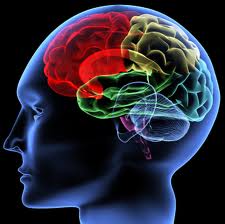 A recent article by Dan Hurley in the New York Times suggests as much. Hurley starts by describing a “memory game” where kids have to remember “which window a cat was in.”
First, it's in a window just before, then in a window a Level before, and finally in a window two Levels before. It's as simple as that: “The cats keep coming and the kids keep remembering.”
Working Memory and “Fluid Intelligence”
Apparently, the “cat game” is one of the games that some researchers say can improve “working memory,” which is defined as: “the capacity to solve novel problems, to learn, to reason, to see connections and to get to the bottom of things.”
All of us use “working memory,” Dan Hurley explains, for remembering telephone numbers, doing math in our head, understanding metaphors or analogies, for making sense out of language, etc.
The sum of the skills of working memory is what we call “fluid intelligence” (as opposed to “crystalline intelligence,” which is produced by long-term memory skills).
Long-term memory and “Crystalline Intelligence”
It seems clear to us that language learning requires long-term memory skills. You need to acquire a good store of vocabulary, grammar structures, and (foreign language) sounds in your brain to be able to communicate, and thereby enhancing your “crystalline intelligence.”
But “working memory” is just as essential. We, at GamesforLanguage.com look forward to research that analyzes the relationship between second language acquisition and improvements of “fluid/crystalline intelligence” in adults.
Language Fluency and “Working Memory”
Just learning words, with the many flash card games now available for phones and tablets, is a good way to accumulate a store of vocabulary, and rules for pronunciation and spelling.
But flashcards alone won't make you fluent. Fluency requires the ability to speak and communicate. And this, in turn, involves a “working memory” that is well-engaged.
A new language confronts a person with many “novel problems.” The learner will have to decode and use new grammar patterns, new sound combinations, to figure out the meaning of new words, and so on.
Language Learning Requires Practice
We can well imagine that real and continuous efforts to acquire and try out a new language will make you smarter by boosting your working memory.
As Hurley states: “practice improves performance on almost every task humans engage in, whether it’s learning to read or playing horseshoes.” However, the required practice is often the greatest hindrance to becoming proficient in a new language.
And as he cautions: “Just like physical exercise, cognitive exercises may prove to be up against something even more resistant to training than fluid intelligence: human nature.”
Language Games to make Practice Fun
Games can make language practice fun, and by taking the boredom out of the required language practice, you’ll improve your “working memory” playfully.
Will you end up being smarter by learning a second (or third) language? Hurley's article seems to suggest as much! But we're also looking forward to more research on that particular topic. In any case, if you start learning a new language now, you'll be ahead!