With no subscription fees and Google ads, we are just focusing on more language games for the coming year.
Plus, we're not up-selling any paid versions, or other products and services. (Some of the listed Partners provide us some minimal referral income with discounts for our learners.)
Yes, we are not in it for the money, but we enjoy making the games. And, we like seeing many more learners, including students in schools playing our courses and individual games.
While our courses may be a little too difficult for outright beginners, they seem to be popular with those that already have some basic knowledge.
These learners also enjoy the travel story dialogues, which provide a context for the vocabulary of the various games. Plus, having the context helps memorization.
It's also interesting to see which games, courses and blog posts have been most popular with our learners and readers over the months and years.
Also interesting, how preferences constantly shift over time as new posts and games appear.
The original Spanish lyrics were written by the Basque/Spanish composer Sebastián Iradier (later Yradier) after he visited Cuba in 1861. Many versions of the melody and translations of the lyrics exist.
Recently, the post Quick Italian: magari and mica has been the favorite of our Italian learners. In Italian conversations you'll often hear "magari" and "mica". To understand their meaning, you have to also understand the context in which they are used.
Except, maybe, for "Saturday", the French days don't much resemble the English days. So, hearing and imitating the sounds, help with building your French pronunciation. Also, our games make memorization more fun.
During the last month Spanish players preferred the Quick Spanish Language Game Estar – Present Tense by a wide margin. Maybe the sleeping man's image also helps to remember one of the 3 basic uses of "estar".
German learners are currently playing the Ich möchte game more than any other game. "Ich möchte ..." is how you politely ask for something in German. This phrase is used all the time in conversational German. Its conjugation, with its different endings, is not easy to learn.
(For our Dutch, and English for Spanish learners, there are not enough learners yet to draw any conclusions.)
If there are any particular words or grammar points you would like to see in games or blog posts, drop us a note at info@gamesforlanguage.com or via our contact page.
Motivation is key to language learning. This has been known to language learners for a long time. But what do wind turbines have to do with it? (Video by weetjedatookweer on YouTube)
“Not enough time” (24%) was shown as #1; “to keep up the motivation” (16%) was shown as #2; and “no access to native speakers” as well as “bad teaching method” (both 15%) shared #3.
Recently, I was re-reading my post again and realized that while the listed difficulties may certainly be valid for many learners “Motivation” and “Interest” are currently the key drivers for me.
What Motivates Me?
As I explained in the post linked above and others, my personal motivation to learn Dutch is our annual trip to the Netherlands for a reunion with Ulrike's Dutch family.
I've been doing a daily Dutch Duolingo lesson for some time now. I had also subscribed to Babbel's Dutch lessons for a month, but had lost interest quickly. On our daily walks I try out my limited Dutch with Ulrike (who speaks Dutch fluently).
During the family reunion this year in September, I still felt frustrated. While I certainly understood more of the Dutch conversations than before, I was handicapped by my limited vocabulary and inability to participate in discussions.
Looking for a solution to my problem, I subscribed to Steve Kaufmann's LingQ and found that the program addresses the two weaknesses I see in both Duolingo and Babbel. LingQ offers material that both interests me and increases my vocabulary.
What Interests me?
LingQ's learning system is based on “comprehensive input”. That means: I learn with material that I "comprehend" (with the LingQ system) and which, in turn, leads to my listening and reading a lot in the target language. As a starter, I listened to and read LingQ's 50 or so little story/lessons
I can stop the audio when I hear or read a word I don't know, click on it, find the translation, put it into my vocabulary list, and then just continue with the story/lesson.
After the stories, I discovered “NOS Nieuws van de Week” a podcast of weekly Dutch News (from a couple of years ago), with much more challenging and new vocabulary. The News include topics I am familiar (e.g. war in Ukraine) or unfamiliar with (e.g. increasing bicycling accidents in the Netherlands caused by e-bikes, and the "Dutch way" to open car doors to prevent some of them).
On LingQ, there are other News podcasts, short stories, topics of economy, politics, as well as audios and YouTube videos, all with the same system of audio and reading. Many of those interest me and I continue to try them out.
The other day I happened to click on a YouTube video on LingQ about wind turbines in the Netherlands. I started to watch the video, but soon realized that there were a number of technical Dutch terms I didn't know.
So, I used the LingQ conversion system which produces a script of the audio with highlights of new words, as well as words I should know and had clicked on before for a translation. (screenshot of a LingQ page, copyright by The Linguist Institute, Inc)
By reading and listening to the audio – and clicking on unknown words for translation – I was able to understand everything.
I then watched the video (without the text) again and could now relate all the technical terms to the images, e.g. blades, gearboxes, drives, transformers, converters, etc.
And, apparently one of the most-asked questions by any visitors who observe turbines is: Why do some wind turbines in a long row of turbines start and stop at times ? I had that same question. And in the video I found the answer:
Assuming the wind is blowing - wind turbines can adjust to electrical network conditions by adjusting the blade angles and thereby stopping their rotation. Cool?!
Language Learning Lessons
For those just starting out, many language programs like Duolingo, Babbel, Rosetta Stone, Pimsleur, etc, may work quite well at the beginning and help in developing learning habits.
Our own Gamesforlanguage program uses easy Quick Games for beginners, and more challenging travel-story-based courses for Intermediate learners. These are also gamified and work for those interested in traveling and learning related vocabulary.
For me, reading, listening to, and viewing a variety of topics that interest me, is currently essential for keeping me motivated.
I really don't “need” to learn Dutch, but if I can increase my vocabulary by learning about things that interest me, I'll definitely keep on going.
Learning about the functioning and configuration of big wind turbines – which had intrigued me especially during our last visit to the Netherlands – is a good example of what motivates me to keep on reading, listening and therefore also learning new vocabulary.
And at the moment, I can find many topics which interest me on LingQ. (And once I have explored all of LingQ's offerings and functions, I'll likely do a full review of the app.)
Once my vocabulary has grown enough, I'll switch to listening to current Dutch Podcasts and start reading Dutch books. And I'll continue to try out my improved vocabulary in conversations with Ulrike on our daily walks. It's no secret that conversations are really the best way to eventually become fluent in any language.
PS: For advanced German learners who want to learn more about Munich‘s pursuit of the Olympic Games Annika’s recent podcast in Slow German may be of interest.
Note: GamesforLanguage or I have no other business relationship with LingQ Languages LTD, except that I, personally, have purchased monthly subscriptions at $14.99/month.
If you love languages and are learning German or Dutch, you’ll enjoy my review of “Comparative Grammar of German, Dutch, Afrikaans, Yiddish, and Frisian. Learn 5 Germanic Languages at the Same Time.” Robertson B Kunz, 2024. Available on Amazon.com
Robbie’s book gives you a solid comparative grammar of these five languages. But it’s also much more. He explains how German, Dutch, Afrikaans, Yiddish and Frisian are interconnected historically and socially. And on top of that, he teaches you a few tricks about keeping languages apart as you learn new ones. Not a bad skill to have!
For me, Robbie’s “Comparative Grammar” has been fascinating because it makes me tackle language learning in a new way. (See also Learning Swedish, Norwegian and Danish simultaneously?, my review of his previous book.) I grew up speaking German, Dutch and English in that order, and I continue to use all three languages in daily life at home and with friends. Also, I understand some Afrikaans and Yiddish, and a little Frisian, but until now, I’ve known little about their history and development.
Looking at languages in a comparative way has its own pleasures. During my day, I switch back and forth between English, German and Dutch. It’s kind of a game to notice and talk about similarities and differences between the languages. For example:
Pronunciation: Sound of the letter “g”: The English “g” in “go” and in German “gehen” is hard; but the Dutch “g” in “gaan” is a soft “ch”.
Grammar: The definite article: English “the” is “de” or “het” in Dutch; but in German you’ve got a string of possibilities - “der, die das, des, dem, den” (depending on gender and noun case).
Robbie’s book is a fun help with such language puzzles. And it’s a great way to just mess around with Germanic languages. Plus, with the examples he adds from Afrikaans, Yiddish, Frisian, and briefly also Scots, Low Saxon and Luxembourgish, he rounds out the language picture in a compelling way.
Puzzles and language dabbling aside, you can’t beat “Comparative Grammar of German, Dutch, Afrikaans, Yiddish and Frisian” as a resource for serious language learning. Here’s quick look at the structure of the book:
Historical, Geographical, Social context
For the first 100 pages or so, Robbie presents the development of each of the languages from Proto-Germanic to Modern times, putting them in a historical, geographical and social context.
You can read these pages through all at once, or to go back and forth between the sections that interest you specially.
Because German, Dutch, and English were already part of my schooling, I found the sections on Afrikaans, Yiddish and Frisian particularly interesting.
For each language and its stage of development, there’s a list of linguistic features, showing changes in sounds, forms, and syntax.
Dialects
This section (about 15 pages) presents a variety of dialects and sub-dialects for each of the languages, their geographical distribution and linguistic features. Interesting, because you may know people who speak a certain dialect, or you may have noticed a specific dialect during your travels.
For me dialects have always been part of my life. The German I grew up with was “Bavarian-Austrian”, the variety spoken in Vienna (“Wienerisch”). The Dutch I speak is “Hollandic” (“Hollands”), spoken in the northern provinces of the Netherlands. The first English I learned was British English, with an accent that later amused my Canadian schoolmates. When I got married, more dialects entered my life. My husband grew up in the Frankfurt area, where Hessian is spoken ("Hessisch"), but his dad was from Berlin and spoke the Berlin dialect ("Berlinerish"), and his mother came from southern Germany. She spoke Swabian ("Schwäbisch"). And so it goes.
Grammar and Example Sentences
The main part of Robbie’s book (from page 117 to page 304) is devoted to traditional grammar points: Nouns, Articles, Verbs, Pronouns, Adverbs, Conjunctions, Numbers.
The coverage of grammar is concise but inclusive.
For example, under “Nouns”, the sub-headings are: Definite and Indefinite Articles, Plural Forms of Nouns, Noun Cases, Noun Possession.
Or, as another example, under “Adverbs”, you’ll find the following sub-headings: Position of Adverbs, Adverbs of Manner, Adverbs of Time, Adverbs of Place, Adverbs of Degree.
For each grammar point/sub-heading, you have a clear, easy-to-understand explanation followed by a comparative table showing the grammatical item in German, Yiddish, Dutch, Afrikaans and Frisian. It includes a short section of “Notable Differences” between them.
As a special feature of the book, Robbie has added 141 tables with “Example Sentences” in English, German, Yiddish, Dutch, Afrikaans, and Frisian to show how they work.
Below are 2 of the tables with “Example Sentences”: (Note: In the book Yiddish is written in Hebrew letters, as well as in transcription.)
Example Sentence from “Noun Cases
English: The woman is reading a book. German: Die Frau liest ein Buch. Yiddish transcription: Di froy leyent a bukh. Dutch: De vrouw leest een boek. Afrikaans: Die vrou lees 'n boek. Frisian: De frou lêst in boek.
Example Sentence from “Position of Adverbs”
English: They went to the park yesterday. German: Sie sind gestern in den Park gegangen. Yiddish transcription: Zey zenen nekhtn gegangen tzum park. Dutch: Ze zijn gisteren naar het park gegaan. Afrikaans: Hulle het gister na die park gegaan. Frisian: Se binne juster nei it park gien.
German Language Conversation
In a separate section, Robbie added a 36 item, back-and-forth conversation between five people, each speaking their own language: Hans (German), Pieter (Afrikaans), Lotte (Dutch), Froukje (Frisian), Moishe (Yiddish), set in "A cozy café in a European town". “The challenge is to understand as much as you can just reading it over.” An English translation follows separately.
The first two items of the conversation
1. Hans sitzt am Tisch und schaut auf seine Uhr. Hans: Ich habe kürzlich über den Wert harter Arbeit nachgedacht, ohne sich auf die Ergebnisse zu konzentrieren. Es scheint eine interessante Philosophie zu sein. 2. Pieter kom laggend binne en sit by die tafel. Pieter: Ek stem saam! Dis soos om ‘n taal te leer. Jy kan nie net fokus op die einddoel nie; jy moet die proses geniet.
Basic German Language Phrases
Finally, Robbie has put together a section with over 90 basic phrases in all five languages “that you might find in a phrase book - to help those people who might want to travel to the areas where the languages are spoken or to get started with conversation.”
An example
English: What do you like to do? German: Was machst du gerne? Yiddish transcription: Vos gefelt dir tsu ton? Dutch: Wat doe je graag? Afrikaans: Wat doen jy graag? Frisian: Wat dochsto graach?
Tips for Learning
Learning with a book such as “Comparative Grammar of German, Dutch, Afrikaans, Yiddish, and Frisian. Learn 5 Germanic Languages at the Same Time”, you’ll need to figure out what will work for you. It may be a good idea to keep in mind the advice of polyglot Alexander Arguëlles: “It is always better to learn languages thoroughly and holistically, and the skills - reading, speaking, listening, and writing - reinforce each other more than you might realize." (Alexander Arguëlles, a reply in the Q&A section on his website). For more about Arguëlles' approach to learning languages, see also Will Language Shadowing Work For You?
1. PARALLEL MATERIAL
The comparative structure and many "parallel" examples in Robbie's book are clearly a strength. As Alexander Arguëlles explains: "Learning different languages with 'parallel material' offers a huge advantage. Seeing similarities and differences helps you to remember words and phrases, but also to keep the languages apart. I would advise you, whenever you can, sound out each phrase so that the different sounds stay with you." (Alexander Arguëlles, a reply in the Q&A section on his website)
2. Listening and pronunciation
Robbie’s book primarily presents visual learning (reading); but he offers his readers a free audio file (via a QR code) “so that you can hear German, Dutch, Afrikaans, Yiddish and Frisian spoken back to back to get a better sense of these five languages.” That’s a good starting point for building listening and pronunciation skills.
To further build on these skills in Yiddish, Afrikaans, and Frisian, you can use other free programs that have these languages, and practice a little with easy sentences. For example:
For German and Dutch there are many choices, including our site, gamesforlanguage.com
3. Practice Writing
I'm an advocate of copying out phrases and sentences to get into writing a new language. So, write out some of the sentences by hand - one language, or multiple languages side by side - as a way to reinforce your visual memory of the language you’re learning.
4. Learn the Material like Waves
Good advice from Robbie: “Don’t focus on mastering everything before moving on to the next section. Rather, you should learn the material like waves, with each additional pass adding new information." As Professor Arguëlles says, "it should be like peeling an onion with each pass getting progressively deeper in your understanding.”
5. Use the Add-One Approach
For some, including myself, learning several new languages together in full chunks may be a little overwhelming. The image of “peeling an onion” got me thinking: One approach to multiple languages could be to start with a language you know, and add one at a time. For Example, if you know German already, add one language and go through the book focusing on English, German + Dutch. The next step will then be going through the book again, adding one more: English, German + Dutch + Yiddish. Keep adding another language until you’re learning with all five.
6. Time Management
You’ll probably agree with Robbie: “The biggest obstacle you will face is not so much the learning of multiple languages at once as it will be your time management and ability to manage your emotional state. Ultimately, learning any language is a lifelong process and a slow one at that. If you are able to study a little bit each day, one day you will wake up and you will be quite good; although you may never notice yourself reaching that level.”
Disclaimer
I was contacted by Robertson B. Kunz to write this review. In return, I was offered a digital Review Copy of the book. We have no financial agreement about sales of the book.
An English speaker who learned standard German and hears “Servus”, “Pfüat di” and other Austrian expressions will often be puzzled. And understanding a conversation held entirely in Austro-Bavarian dialect will really be challenging - it even will be for Germans from northern regions.
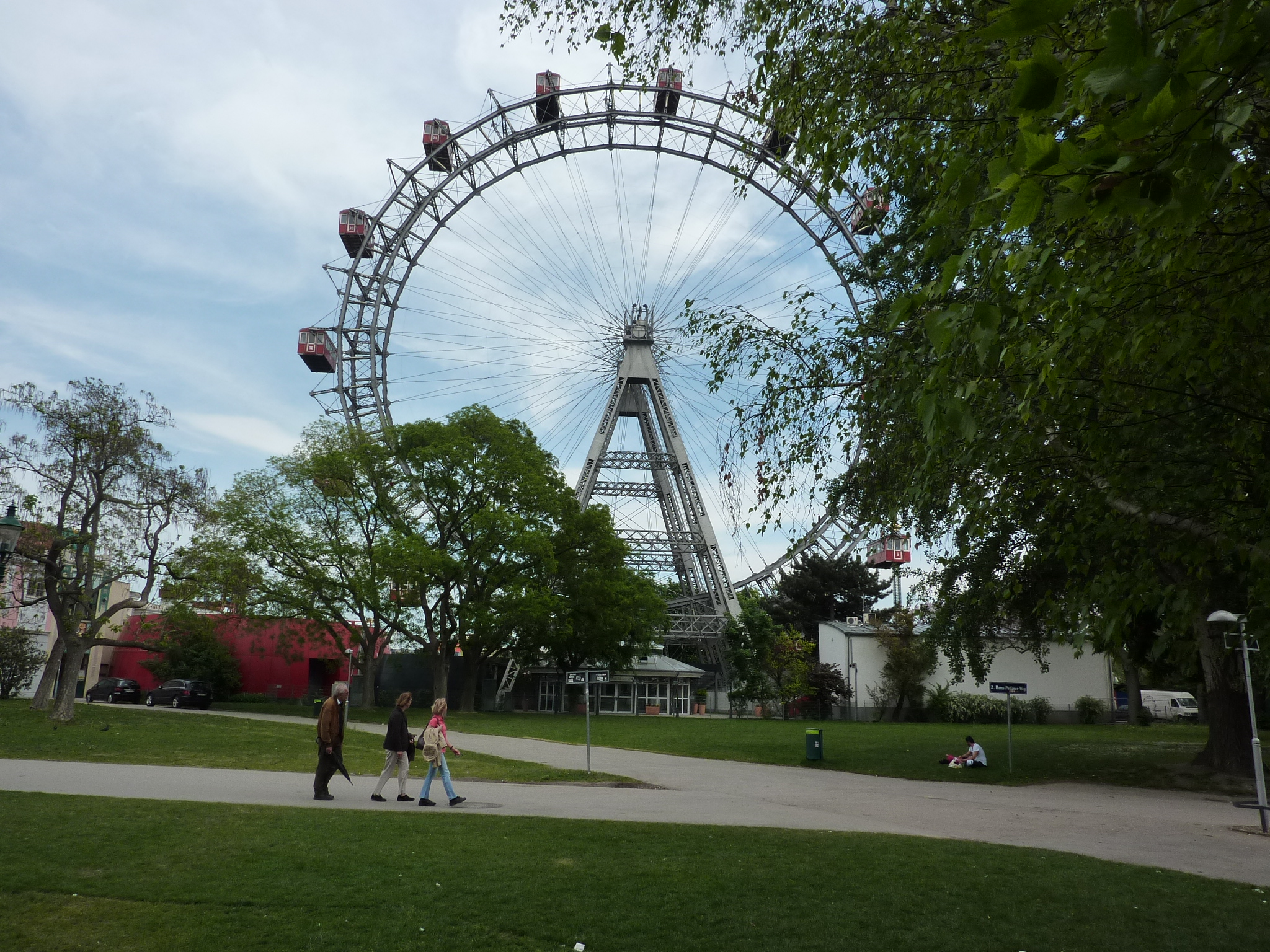
German and foreign visitors to Vienna, Austria's capital, who visit "The Prater", often wonder about its name. The word comes from the Latin "pratum", meaning meadow. The Prater first served as an imperial hunting ground and later became a public park. "Das Riesenrad", the giant Ferris Wheel (see picture) in the amusement section of Vienna's Prater, was built in 1897. Movie buffs will recognize it from several movies, Orson Welles' classic of 1949, "Der Dritte Mann" (The Third Man), "The Living Day Lights" with James Bond, and "Before Sunrise".
The German spoken in Austria is part of the Austro-Bavarian dialect, which 12-14 million people speak as their daily language. It is the largest German dialect group. In general, for those speakers who have had exposure to both, Standard German and Austro-Bavarian are mutually intelligible.
Austro-Bavarian is spoken in all of Austria, except in the western province of Vorarlberg. (The dialect group there is Alemannic, versions of which which is also spoken in parts of Bavaria, in Baden-Württemberg, and in German-speaking Switzerland. See also our post: “Gruezi" and Other Swiss German Expressions )
Last summer, we had the chance to travel in Austria and meet up with family and friends. I loved hearing and speaking the sounds of the language I grew up with. Even just the distinct melody of someone speaking Austrian makes memories rush in. As a child, I lived with my family in the Vienna outskirts. During Easter vacation we skied for a week in the Vorarlberg Alps. Each summer we spent a few weeks at the Ossiachersee, a beautiful lake in the southern province of Carinthia.
So, it’s been fun to dig out some of the common Austrian words and expressions that a traveler to Austria might hear and see.
(For those readers with a good knowledge of German, this classic YouTube clip of Der Herr Karl, performed by Helmut Qualtinger, will give you a taste of the Austrian/Viennese dialect.)
To get you started, here are 15 words and expressions that are typically used in Austria. I've added the standard German equivalent, and a translation.
Literally, “(Your) servant!”. This informal greeting is used with friends and means both “Hello” and “Goodbye”.
Origin: from the Latin word “servus” meaning, “Sklave, Diener” (slave, servant).
Note: Young people also use a variety of other informal greetings in Austria, such as “Hallo”, “Hi”, “Hey”.
2 Grüß Gott! (Guten Tag! - Hello!)
Literally: “God greets you!” This is the standard greeting you would use in shops, at a ticket counter, etc, or with people you’ve just met. In Northern Germany, you'll normally hear “Moin”. An Austrian variation used with friends, would be “Griaß di” (I greet you) or the plural “Griaß eich”.
Origin: from the traditional greeting “Grüß dich Gott” or “Möge dich Gott segnen" (May God bless you).
3 Pfiüat di! (Tschüss! - Bye!)
Literally: “May God protect you!” This is an informal way to say “Bye” to friends.
Origin: from the earlier German expression “G'behüt' di”, a contraction of the phrase “Gott behüt dich” (May God protect you).
Note: Other informal words for “Bye” commonly used in Austria are “Baba”, “Tschüss”, “Ciao”.
4 Passt scho! (In Ordnung! - That’s good!, Fine!)
Literally: “It fits already”, as for “Es passt (schon)”. You’ll hear this everywhere in Austria as an expression of agreement, also as an alternative of “Okay”.
Origin: from the French “passer”, primarily in the meaning “ça passe” (that’s acceptable).
5 Na geh’! (Wirklich? - Really?, You must be kidding!)
Sort of literally: “Go on!” This phrase expresses surprise and often disbelief.
6 So a Gfrett! (Wie ärgerlich! - What a nuisance!)
Literally: "Such a hardship!" “Gfrett” means “Ärger, Mühsal” (trouble, hardship). You use it when you're annoyed.
Origin: from the dialect expression “sich fretten”, meaning, “sich plagen” (to scrape along, to slave away).
7 a Heuriger (ein Jungwein - a young wine, wine of the year)
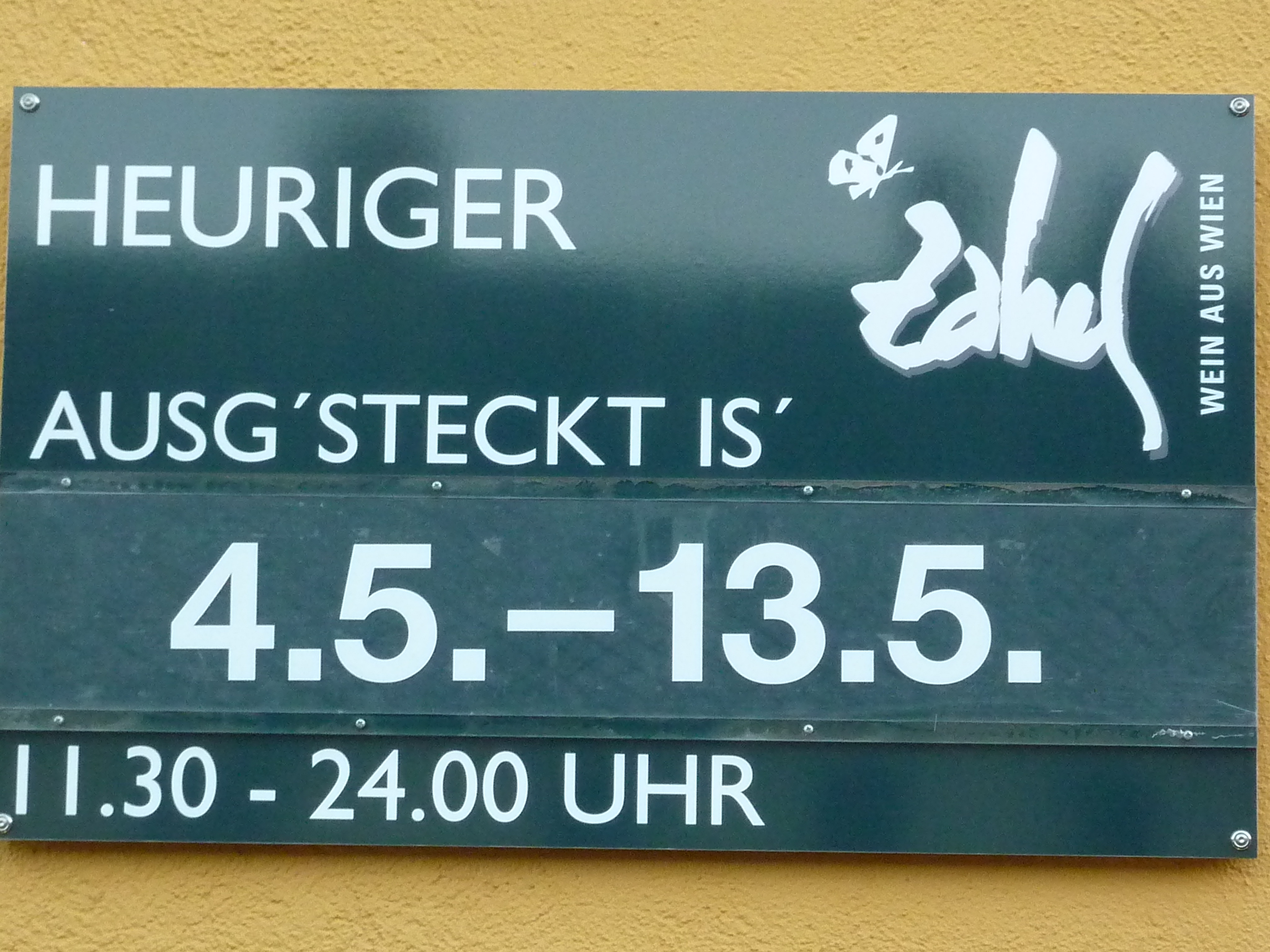
Literally: “this year’s (wine)”. (Wein der letzten Lese - wine from this year’s harvest). "Heuriger" is also the name of a tavern where such a wine is served. In this context, "Ausgesteckt" means "We're Open!"
Origin: from the Old High German phrase “hiu järu” meaning “in diesem Jahre” (in this year).
Note: “The tradition originated in medieval times, and was inscribed as a UNESCO Intangible Cultural Heritage in 2019. In the spirit of Gemütlichkeit(congeniality), friends and family meet at a heurigen to enjoy wine, cheeses, charcuterie, bread, salads, and a variety of Viennese spreads and pickled foods, plus Viennese folk music. ” [Paste Magazine, February 12, 2024]
8 die Semmel (das Brötchen - roll)
Origin: from the Latin word “similia”, which means “feines Weizenmehl” (high quality wheat flour).
Note: In Austria, “Semmel”, is also called “Kaisersemmel”. A story claims that its name goes back to a decree by emperor Joseph II, in the year 1789. A "Semmel" is a traditional bread roll that has a typical pattern on top. (see picture) It is crispy on the outside and soft on the inside. The word “Semmel” is known in other German-speaking regions, but may refer to different types of baked goods.
9 der Palatschinken (der Pfannkuchen - thin pancake, crepe)
Origin: from the Latin word “placenta” , meaning “Kuchen” (cake), to Rumanian “placinta”, to Hungarian “palacsinta”, to Czech “palacinky”. (Hermann Paul, Deutsches Wörterbuch)
Note: "Palatschinken" are usually served as a dessert. They are rolled with a sweet filling such as apricot jam or quark/farmers cheese and dusted with powdered sugar.
10 der Kaiserschmarrn
Literally: "Schmarrn" means "mess, mishmash, nonsense".
Note: To make this mishmash, pour Palatschinken dough into a pan, cook it, shred it, add butter and raisins, and finally scramble everything together. What you then have is a "Schmarrn", nice and messy and delicious. You serve it with apple sauce or plum compote. As one of the stories goes, the Austrian Emperor Franz Josef (1830-1916) loved this haphazardly-made dish, which his kitchen produced by mistake. (Image:By Takeaway - Own work, CC BY-SA 4.0, https://commons.wikimedia.org/w/index.php?curid=42341737)
11 der Zwetschkenkuchen (der Pflaumenkuchen - plum tart)
Origin: the word “Zwetschke” comes from the Rumanian “davascena, damascena” meaning “Pflaume von Damascus” (plum from Damascus). [Hermann Paul, Deutsches Wörterbuch]
Note the expression: “seine sieben Zwetschken einpacken”, wich literally means “to pack one’s seven plums”. This is an Austrian variation of “seine Siebensachen einpacken”. “Siebensachen” (seven things) stand for “whatever you own”.
12 Nockerln (Klößchen – dumplings)
Origin: from the older German word “Nocken” (clumps, small hills). And, there may or may not be a connection between the Italian word “Nockerl” and the Italian word “gnocchi”.
Note: In Vienna, “Eiernockerln” (egg dumplings) are a specialty and served as a side with meat, and or a salad. On the other hand, the famous “Salzburger Nockerl” (see picture) are a dessert soufflé, served warm and with a dusting of powdered sugar.
13 der Pareidiser (die Tomate – tomato)
Literally “apple of paradise”.
Origin: The “tomato”, called “tomatl” in the Mexican languageNahuatl, was brought to Europe from South America at around 1500 A.D. In Europa the unknown red fruit was soon named “Paradies-Apfel”, which in time shortened to “Paradeiser”. [Kurier, 26.08.22
14 der Karfiol (der Blumenkohl – cauliflower)
Origin: from the Italian word "cavolfiore", (cabbage flower). In fact, the Standard German word “Blumenkohl” literally means “flower cabbage”.
15 der Spezi (der Kumpel – buddy, really good friend)
Origin: a shortened version of “Spezialfreund” (special friend, very good friend), commonly used since the 19th century.
That Austria's language was impacted by its history is not surprising. Even just looking at the period from 1867 to 1918: today's Austria was then the center of the Austro-Hungarian Empire, ruled by the House of Habsburg. The territory included Hungary, Bohemia, Moravia, Bukovina, Transylvania, Carniola, Küstenland, Dalmatia, Croatia, Fiume, and Galicia, in other words, numerous ethnic and linguistic regions.
By ArdadN - Transferred from en.wikipedia to Commons., Public Domain, https://commons.wikimedia.org/w/index.php?curid=5867649
Today Austria shares its borders with 8 countries: Germany (northwest), the Czech Republic (north), Slovakia (northeast), Hungary (east), Slovenia (south), Italy (southwest), Liechtenstein, and Switzerland (west).
And with the open borders of the Schengen agreement, the neighboring languages will continue to influence the Austrian dialect.
Bio: Ulrike & Peter Rettig are co-founders of Gamesforlanguage.com. They are lifelong language learners, growing up in several European countries before moving to Canada and the United States. You can follow them on Facebook, Bluesky, and Instagram.
If Scandinavian languages are your thing, this book is for you: “Comparative Grammar of Swedish, Norwegian and Danish, Learn 3 Scandinavian Languages at the Same Time” Robertson B. Kunz, 2024. It is available on Amazon.com.
Learning a couple of new languages at the same time can be a challenging task, but Robertson Kunz shows that there are real advantages to doing it that way.
Most people learning more than one language experience mixing them up, especially if the languages are quite similar. How can you speak your new languages with some fluency, without rehearsing each statement before you speak?
That's a question I've been struggling with too, but I think Robertson book has given me a technique that looks promising.
In his introduction, Robertson talks about “practicing keeping [the languages] apart” as a skill that you can practice, and get good at. We'll have a look at that.
You could use this book for learning all three languages, or if you know one or two already, for adding the second, or third.
Robertson notes that he was "greatly influenced by Professor Alexander Agüelles in his view that languages should be studied in language families rather than one at a time." Professor Agüelles is also known for a method called "Language Shadowing", which we discussed in our earlier blog post "Will Language Shadowing Work for You?"
How the Book is Structured:
The first hundred pages of Robertson's book consists of several interesting introductory sections, which talk about about the languages, their evolution, the dialects, important historical and political events, the phonology of Swedish, Norwegian and Danish, as well as their mutual intelligibility, and more.
Following this, the book is divided into nine grammatical topics.
Each of the topics has a number of short and clear grammatical explanations comparing the languages. These are each followed by numerous “identical” phrases in English, Swedish, Norwegian and Danish.
The Skill of Keeping Languages Apart
According to Robertson, it's practicing the side-by-side phrases, which is the key to learning how to keep the languages apart. In one of his YouTube videos, the author suggests that you “Write out phrases next to each other … read them many times … [and] practice switching back and forth between them.”
To give you an idea what such a practice could look like, here are two examples, one from the beginning of the section “Nouns” and one from the beginning of “Adjectives”. Each section has numerous side-by-side phrases in English, Swedish, Norwegian and Danish.
By trying out these phrases yourself, you'll have an idea of how this approach would work for you.
Definite and Indefinite Nouns:
English: I have a cat. The cat is black. Swedish: Jag har en katt. Katten är svart. Norwegian: Jeg har en katt. Katten er svart. Danish: Jeg har en kat. Katten er sort.
Other topics in the “Nouns” section:
• Countable and Uncountable Nouns • Plural Forms of Nouns • Genitive Case of Nouns
Adjective and Noun Phrase Agreement:
English: a beautiful city Swedish: en vacker stad Norwegian: en vakker by Danish: en smuk by
Other Topics in the “Adjectives” Section:
• Types of Adjectives • Predicative and Attributive Adjectives • Adjective Negation • Adjective Order • Adjectives in Plural Form
Learning the Pronunciation
On page 5, you can download a “Free Gift”, an audio file “to hear Swedish, Norwegian and Danish spoken back to back to get a better sense of these three languages.”
Learning the correct pronunciation right from the beginning is the best way to go. So, it's probably worth using another program, a friend or tutor, or an AI tutor for regularly practicing the sounds and intonation of your new language(s), and specifically for how to pronounce each of the sentences.
Language Switching
For me, language switching happens all the time in the four languages I live with every day: German, English, Dutch and French. I talk and text with family and friends. I'm not perfect, but I don't worry much about mixing up the languages. French and Italian a not a problem either.
But some time ago, I learned essential travel phrases in Norwegian, Swedish and Danish before visiting each of the countries. Now, a few years later, I do find it a little difficult to keep them apart. So, I'm excited about relearning the basics of these languages by switching between them as presented in the book.
Good Advice
The method in this book is pretty straightforward. But of course, learning a language does involve time and persistence. And so you'll probably agree with Robertson when he says: “The biggest obstacle you will face is not so much the learning of multiple languages at once as it will be your time management and ability to manage your emotional state."
With all this hype about "Learn a language Fast", it's interesting to see Robertson - a polyglot who actively works on 8 languages a day - say the following: “Ultimately, learning any language is a lifelong process and a slow one at that. If you are able to study a little bit each day, one day you will wake up and you will be quite good; although you may never notice yourself reaching that level.”
Disclaimer
I was contacted by Robertson B. Kunz to write this review. In return, I was offered a digital Review Copy of the book. We have no financial agreement about sales of the book.
If you're into Romance languages, be it Spanish, and/or Portuguese, French, Italian, here's a learning tool and grammar guide that you would enjoy: “Learn and Retain Spanish, Portuguese, Italian, and French, with Spaced Repetition”, by Adros Verse Education, Bucharest 2024.
The book is available on Amazon, as well as on the Adrosverse website. There are also other sellers.
The book, available as a printed book or an ebook (counting 410 pages), accompanies you through 6 Levels of your language journey: I. Basic, II. Beginner, III. Elementary, IV. Intermediate, V. Advanced VI. Fluent. Each level introduces key grammar points and vocabulary. With the book come Anki Flashcards decks for spaced repetition learning.
The sequence of grammar topics for each language is presented in a fairly traditional way. No big surprises there.
But what makes this book really interesting is how it also pulls together the similarities and differences between the four languages. This applies to the sounds, grammar, and word meanings. There's a logical sequence from Level I to Level VI and individual topics are easy to search and find.
Learning To Speak
If you also want to become conversational one or all of these languages, I highly recommend that you set yourself up for speaking practice right from the start and beyond the book. Try it with a friend, with a coach, or even with an AI tutor if you can set one up.
No digital program will teach you how to freely engage in conversations, no matter how much repetition it provides or how well grammar points are explained.
Words need to be in context and part of meaningful sentences that flow in sequence. And these have to be understood in their full contextual meaning.
Besides practicing speaking, I also recommend reading meaningful texts as soon as you can. This will teach you how the language is put together and how “grammar” cannot be separated from meaning.
That being said, once you start on this book and follow through with some consistency, you'll be building a solid grammar and vocabulary foundation in the languages you focus on.
Spaced Repetition
This is a method of “learning new material and then reviewing and memorizing that material over spaced intervals”. With the Anki app, you have a digitalized version of what used to be paper flashcards or index cards in a box.
Using spaced repetition with the Anki app is an integral part of learning with this book. So, early on, you'll get instructions on how to download and set up Anki (p. 10-14 of the ebook). The use of AnkiWeb and AnkiDroid is free. AnkiMobile, needs to be purchased from the Apple Store.
With the purchase of the book, you've received Level I Spanish/Portuguese/Italian/French Anki package for free for a limited time. Later flashcard sets have to be purchased.
Looking at Level I
Level I: Basic is the most substantial section, and runs over 100 pages long. There you can learn, relearn, or just refresh your knowledge of language basics in Spanish, Portuguese, Italian, and French. To give you an idea of the content:
1. Alphabet and Pronunciation: covers the consonants and vowels in each language as well as in comparison to each other.
2. Similarities to English: It's nice to get an explanation why Spanish, Portuguese, Italian, and French are considered “easy” languages to learn for English speakers. It includes examples of English cognates in the Romance languages and parallels between the languages.
3. Gender and Plural: English nouns don't have gender, and there is no agreement between adjectives and nouns. This section presents the four languages individually and their specific patterns of agreement.
4. Cardinal Numbers: Numbers are very useful to have, especially for travel. This section lists the numbers comparing them in 4 languages from 1 – two billion (2.000.000.000). It's a great place to double-check if you're not sure how to spell or say a number.
5. Subject Personal Pronouns: This section is particularly interesting for English learners as it untangles, among other things, the different forms of “you” in Spanish, Portuguese, Italian, and French – singular/plural, formal/informal. Again, an excellent reference to check when you're not sure.
6. Present Indicative Tense I: Verb conjugation in the present tense in English is not complicated. For example, taking the verb “to go” - singular: I go, you go, he goes; plural: we go, you go, they go. By contrast, learning verb conjugations in one of the Romance languages takes practice and repetition. And ultimately, you'll want to be able to use verbs in each of these languages automatically, without having to think about sound and ending.
7. The Articles: Likewise, articles in Romance languages are more complicated than in English, which basically has only three forms, “the”, “a”, and “an”.
8. Interrogative Pronouns & Adjectives. Being able to formulate questions is an essential tool for building basic conversational skills. For once, asking questions in Spanish, Portuguese, or Italian is less complicated than in English. French is an exception there.
9. Basic Vocabulary: Colors, Times & Seasons, Directions, Family, Anatomy. Last but not least, you'll learn and practice some useful vocabulary.
A Word about Fluency
Levels II to VI build on the basic grammar topics. That is a very satisfying way to proceed. For example, prepositions are an excellent topic to drill as they are tricky to use in all languages, as are the various types of pronouns and certain idiomatic expressions. As expected, quite a bit of attention is given to irregular verbs, and the many verb tenses that occur in Romance languages.
Level VI is entitled “Fluent”. Finishing the book, with all the Anki practice still does not guarantee that you'll be a fluent speaker. Yes, you'll know what a “Pluperfect Subjunctive Tense” is, and can probably rattle it off in a couple of languages, but the door to fluency has another entrance. You need to practice speaking, and actively use the language in conversation with others.
Learning to understand others and making yourself understood requires remembering and internalizing grammatical patterns and conversational language, and producing these in real time.
All that being said, I love having a structured approach to mastering the grammar of languages I'm learning and to practicing vocabulary. These are my first impressions. I'll be doing an update in a few months.
Disclaimer
I was contacted by Adros Verse Education to write this review. In return, I was offered a pdf Review Copy of the book. We have no financial agreement about sales of the book.
Most of us know that there is a big difference between “knowing” vs “speaking” a foreign language.
Sometimes friends talk about the foreign language they studied in school or college.
They may acknowledge that they have not kept up with the language, but then say: “I could still get myself understood when I'm in that country.”
Well, I'm not going to tell them, but I have bad news: You won't be able to make yourself understood. “Speaking” a foreign language requires practice, even for very simple things.
I know – I've been trying to learn Dutch for several years know, mainly by doing the very limited Duolingo program (Gamesforlanguage does not have a Dutch course).
Dutch shouldn't be that difficult for me. My native language is German, many Dutch words have the same Germanic root, and Dutch grammar is much easier than German grammar.
I can read and mostly understand Dutch conversations and podcasts when I know the general topic. But speaking it fluently is still very difficult.
Recently, Ulrike and I have started a ”Dutch language day”, a day when we only speak Dutch. I'll keep you updated on my progress.
(Ulrike speaks Dutch fluently, having gone to school for two years in the Netherlands as a child. While her vocabulary started out as being somewhat limited, she always made a point of speaking Dutch with her sister, cousins and friends.)
On our “Dutch days” she'll correct both my mistakes and my pronunciation. Because Ulrike learned Dutch as a child she sounds like a native to Dutch speakers.
I also know that I'll never be able to speak Dutch without a German accent. But that is okay.
Public Figures with Foreign Accents
For Americans, there are wonderful examples of well-known public figures who came to the US as teenagers or adults and whose English could not be called anything but “fluent” - although their accent may still identify them as non-natives.
• Henry Kissinger was 15 when he came to the US in 1938. • Arnold Schwarzenegger was 21 when he arrived in the US in 1968. • Arianna Huffington was 19 when she moved to England in 1969. • Martina Navratilova was 19 when she came to the US in 1975.
Most readers will have heard at least of one of these celebrities on radio and/or television. You probably would call their English fluent – even though their more or less distinct accent makes it clear that they learned their English later in life.
(Other examples, such as Albert Einstein, the famous architect Leoh Ming Pei, Supreme Court Justice Felix Frankfurter, etc. could also be listed, but their voices are less well known.)
It's likely, however, that most of these immigrants already had a basic knowledge of English when they arrived in the US. And, they perfected their new language in school or through diligent individual study.
One interesting theory that applies to sounds in languages is called “categorical perception”.
My personal experience with learning Dutch as an older adult has confirmed this for me: Not only has it become more of a challenge for me to distinguish several Dutch sounds (that are different from German), but also to imitate i.e. reproduce them.
This is where young kids also have a big advantage over (older) adults: They are much better not only at hearing sounds, but also at imitating them.
But all is not lost: The same way that actors and opera singers can perform in foreign languages (they also spend much time learning and practicing), we can improve our listening and our pronunciation as well. By listening to and practicing “foreign” sounds, we also can get better hearing and saying them.
This is why you should always repeat foreign words aloud in an online language course. In our Gamesforlanguage courses and games we frequently encourage our learners to do so.
But even if you never acquire true native fluency in a foreign language or a perfect accent, being able to understand and be understood is quite likely the main reason you started learning a foreign language in the first place. So go for it! Communicating in another language is a special feeling of mastery.
For the month of July, Laney, the 16-year-old daughter of a close friend, came to visit us on her own. She had one request: Please, speak only English with me. At the end of July, we sat down for a brief interview to talk about her month-long English immersion experience here in the US.
Laney lives in a French-speaking town in Switzerland. She has a very good knowledge of school English. She also came with a lot of enthusiasm. I also asked her about the progress she felt she had made. (This is not a photo of Laney.)
Tell me a little about yourself:
I am 16, and maybe in what you call grade 11 in the US. My native language is French, but I go to a French-German bilingual school and also speak German. I love reading and running.
Are you a shy person?
Depends on the person I'm with, sometimes I'm more and sometimes less extrovert or introvert. At home I'm medium.
What is your background in English?
Oh, English was always there. I started in English day care. We did songs and little games. In primary school, I had English for six years as a subject, but also private lessons and group lessons.
For English classes in my school now, we read literature, do grammar exercises and speaking exercises. Our teacher speaks German as a native language, but never uses German or French in class. His English has an American accent because he went to university in the US.
Literature: We read books, do quizzes about the story. We discuss what we think about it, share opinions and write essays about philosophical questions. For example, we read The Giver by Lois Lowry. We looked at the film. And as a project, the class had to create a film about it.
Grammar: We have grammar books with homework exercises to practice. The teacher goes fast over the topics. I think grammar is helpful. But sometimes you need to search for more rules to understand it. Rules help at the beginning. But when you talk you can't think. It just sounds right because you said it so often.
Speaking: We do presentations and the teacher makes us speak a lot. In class he puts us into groups to debate topics and questions, why you like something, and why you don't.
What has improved the most for you with the English immersion here in the US?
Just to be in the US has improved my English a lot. Especially conversations. I was forced to understand what other people said and I needed to speak so that they can understand.
In class at home, students don't use the words that people use in conversations here. Actually, I often feel that my classmates don't really like English. They have a French accent, can't seem to get off it. Native German speakers have a better accent in English. The French really hang on to their French accents! Maybe they think it's charming?
I listen a lot to podcasts and audio books but the language is also different from conversations.
What has been the most difficult about English here?
The most difficult thing? Making mistakes. I say something, then I hear that it's a mistake, but I can't take it back. I've said it!
Mistakes that I do the most: not get the ending right for the 3rd person, to add the -s. That is really hard for me. I often just don't do it.
Any words or expressions that you found especially puzzling?
Yes, there are a few things that people said and I could not figure out:
> Something is "low key". (meaning, relaxed, not stressed) > That's "101". (meaning, introductory, beginning level) > The question, what's your "ETA"? (meaning, estimated time of arrival) > Someone would be talking, and then say "Period." (meaning, definitely, that's final) > The difference between "grapes" and "raisins". In French we use "raisins" for "grapes".
What has been the easiest for you during your English immersion here in the US?
I don't need to make a big effort to speak, I just did it. Well, I like English better than French. That is about using the language. For me: when you say something in English it sounds better. French is good when you write and so, but English is a friendlier language.
Did you notice customs that are different from home?
Yes, people are friendlier. It's easier to have contact at the beginning. We spent most of the month in a mountain village with tennis courts, a pond for swimming, restaurants with an outside terrace.
So it was easy to meet others my age. But when I thought I made plans to get together with a girl my age, she didn't show up. This happened twice, with two different people. If you do that in Switzerland it is really bizarre. So I don't know.
Restaurants: The Caesar salad in the US is different. For example, in Switzerland, you automatically get the chicken, here you have to pay more for it.
Shopping: When you shop clothes, they have candy at the check out, even at clothing stores like Old Navy and Primark. Not in Switzerland. The supermarkets have a lot of processed food, so many more here than in Switzerland. We know that, it's not surprising.
Why are you learning English?
I like language, I like to speak in other countries without using my phone or a translation app. Maybe I'll study in the US later.
It's good for our brain plasticity to switch between languages. I like to do a little bit of everything. Mathematics, music, languages, they are different skills. I like all of them, they are fun.
This was my first time really immersed in English. Two weeks are short to be immersed. One month is pretty good. There are days that are better than others. There were days when I made so many mistakes. But you learn that way too.
Any advice for language learners?
Do lists of expressions of words that are more difficult. Use a little notebook. Put the list on your phone. Talk with people. I managed to get together with people my age, that made it fun and interesting.
Thank you, Laney! So, you're flying back home tomorrow. We're going to miss you! Have good flight!
With a name like Gamesforlanguage.com, it's no wonder that people find us by searching language games. And even if our main languages and courses are French, German, Italian and Spanish, it is not difficult for us to add games for other languages by using our games format.
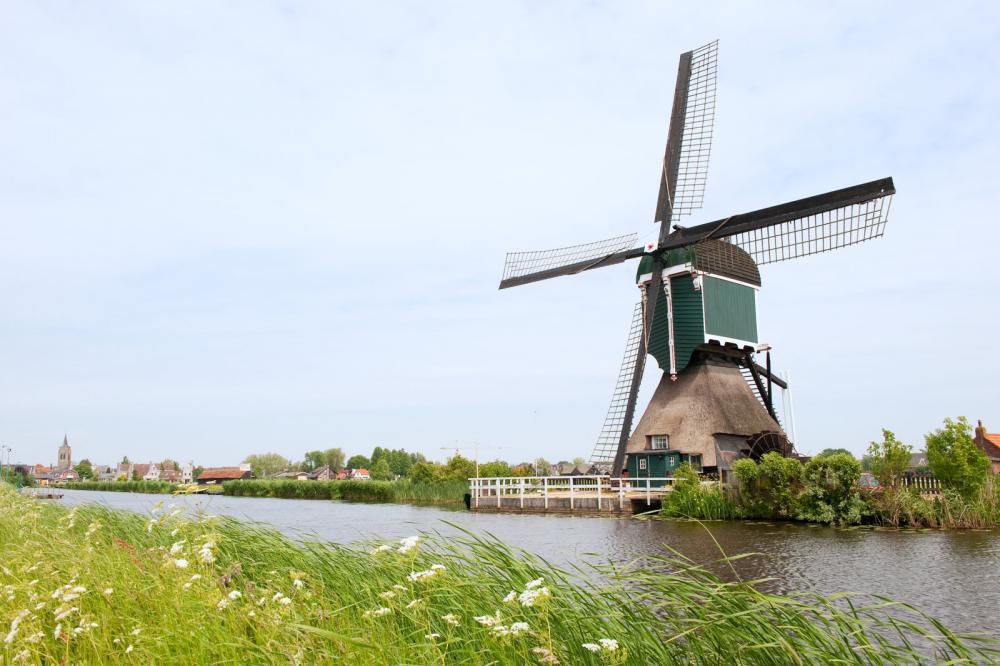
The first new language game we have just added is in Dutch. As readers of our Blog may remember, Ulrike is also fluent in Dutch. She attended school for two years in the Netherlands when she was 9 and 10 years old and visits family quite regularly there. She is also well aware how her “children's Dutch” vocabulary has expanded over the years. While language games alone will never make you become fluent in any language, expanding your vocabulary is essential for language learners at every level.
That's probably why many schools have started to use our language games with their students. Not only are these games completely free, they also don't show any google ads or other advertisements, and can be played without registering.
For those learners who also play our courses, registering is only essential so they can return to the course where they left off. And these courses are also totally free, without ads, upsell or other add-ons used in so many other “free” programs.
We know which games are the most popular. That's why the first Dutch game is “Days of the Week”.
You'll find this game by clicking on the left image or on the link above. As we'll add more Dutch games in the future you'll find them by clicking on Quick Games, and looking through the list.
What is the appeal of playing a “Days of the Week” shootout game in another language? For one, the names of weekdays are with us every day. They are easy to learn and useful to have. The extra bonus is that a beginner will get some nice basic pronunciation practice.
Dutch is a Germanic language, so if you're learning Dutch, and already know English, or German, Swedish, Danish or Norwegian, you have a head start. In these languages, the words for weekdays resemble each other. For example: Monday is Montag (in German), måndag (in Swedish), mandag (in Danish and Norwegian), and maandag (in Dutch).
Playing the days of the week in Dutch has you practice sounds and letter sound combinations that are typical for Dutch. For example, Dutch has particular vowel combinations: the open “aa” in “maandag”, the “oe” in “woensdag”, the “ij” in “vrijdag”. And then there's the Dutch “g” sound in “-dag” that are hard for some English speakers.
Understanding Swiss German dialects is a real challenge for German learners. But they are not alone: Even German natives often have great difficulties with some Swiss German dialects.
When traveling in Switzerland, hearing different languages spoken is just part of the experience. Sitting in a café, riding on a tram, going by train, standing in a chairlift line, walking in the countryside - you're bound to hear people speak Swiss German with each other.
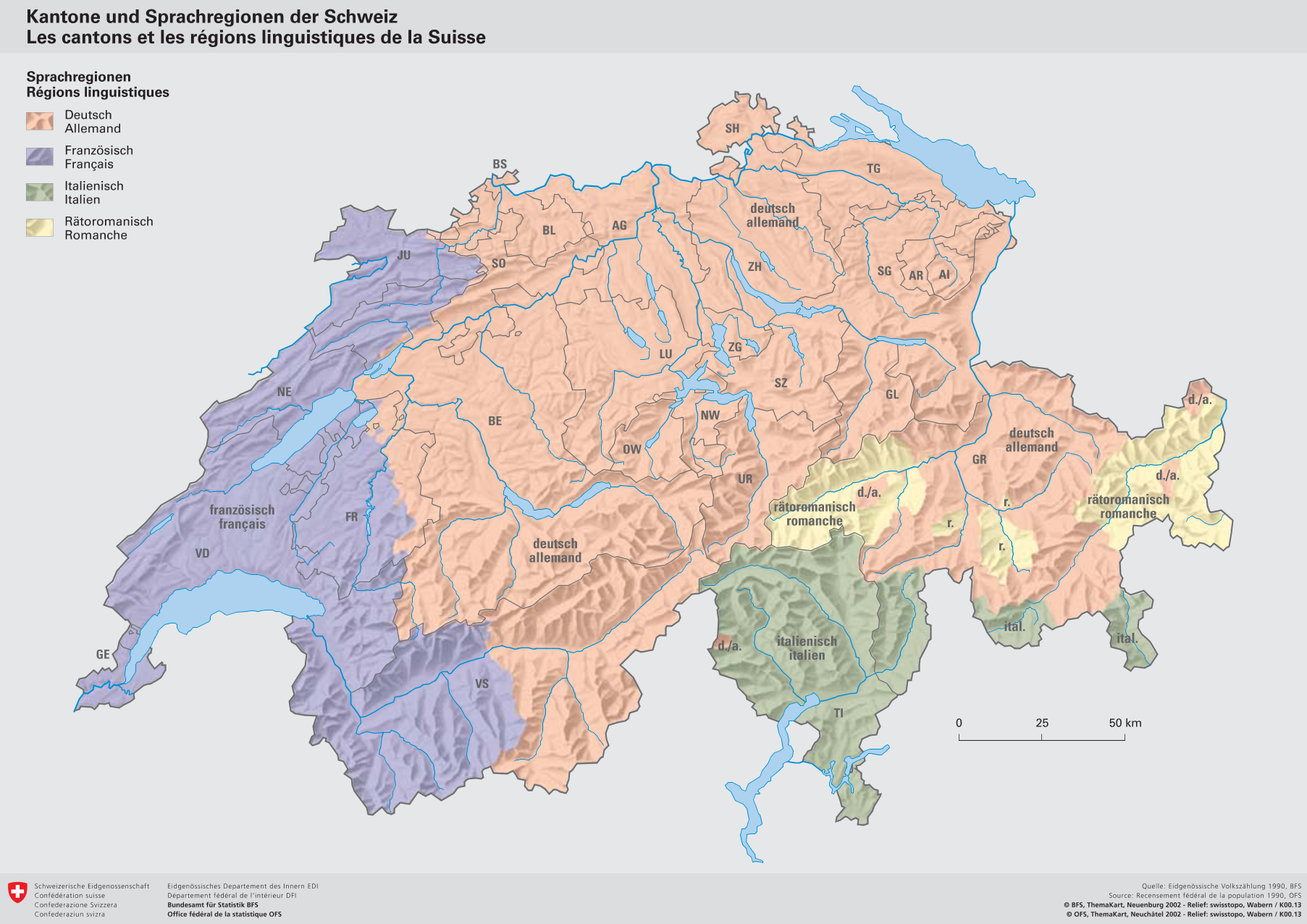
As you can also see on the map above, the (Swiss) German Cantons occupy the largest region of Switzerland.
But why are Swiss German dialects such a big challenge for German learners? There are a few reasons.
When we say “Swiss German”, we are not referring to a unified language. As they grow up, Swiss Germans learn to speak different versions of the Alemannic German dialect, depending on the region in Switzerland they live in. Only when they start kindergarten or school are they exposed to "standard" and written German. One could therefore argue that all Swiss Germans grow up bilingually.
Any of the Swiss German dialects differ from standard High German in sound (phonology), grammar and vocabulary. Because of the different sound systems, people from northern Germany do not easily understand Swiss German.
There is also no standard written Swiss German. In writing, Swiss Germans use their dialect mostly just for some informal communication, sometimes in emails, text messages, on social media, occasionally in personal letters etc. The words are then written phonetically, just the way they are said. The sign left we saw at a restaurant wishes "Guten Appetit" (Enjoy your meal). People also say it to each other before a meal. In all official and business communication, standard German ("Schriftdeutsch" i.e. written German) is used.
But Swiss Germans from different regions in Switzerland (and some Austrians, e.g. from Vorarlberg, who also speak an Alemannic dialect) do mostly understand each other, maybe with the exception of some remote mountain dialects.
To simplify: Swiss German dialects range from Low Alemannic, to High Alemannic, and to Highest Alemannic, with Low, High, and Highest referring to the geography of Switzerland.
Low Alemannic is spoken in the northernmost parts of Switzerland, which include the city of Basel.
High Alemannic is spoken spoken on the Central Plateau, an often hilly stretch of land that extends between the Jura mountains (south of Basel) and the Alps. Both cities of Bern and Zurich are located on the Swiss Plateau.
Highest Alemannic is spoken in the alpine regions of Switzerland, which include the Canton of Valais.
A Sample
Remember, there is no standardized spelling of Swiss dialects. In the examples below, you'll hear how this typical conversational exchange sounds in the four different regions. There are some differences in the sounds, but listen especially to the music (intonation) of each phrase. (See the German translation in parenthesis. Please note: The spelling of the dialect reflects what we as German speakers hear. If you have other suggestions, please write us.)
"How are you?" (Wie geht es Ihnen?) "I am fine, thanks. And how are you?" (Gut, danke. Und wie geht es Ihnen?)
Worried about getting the sound right? If you're greeted when you enter a shop, for example with the universal Swiss ”Grüezi“, it may be best for you to just echo the greeting back.
Our visits to Switzerland have been mostly to the bilingual city Fribourg, which straddles a language border between French and the Swiss German. To find out more about bilingualism in Fribourg, click on the article by Antilia Wyss HERE.
Can you decipher this sign in the "Hochzeitergasse" (Bridal Couple Lane) in Fribourg? (A hint: It is not politically correct...!)
We've also gone many times to the Berner Oberland to ski. Read about our Bärndütsch language lessons in Gstaad.
How Many Swiss German Dialects Are There Really?
Hard to count. One YouTube video presents 23 different Swiss German dialects. There is also an iOS app that's called Diäläkt App, where Swiss Germans can record local words and find out what region(s) they come from. You can listen to various examples. One could also say that each village has its own dialect that people continue to use.
Why Are There So Many Swiss German Dialects?
A brief summary helps to understand why: "The need for a standardized German written language came up in early 15th century at the time of the Reformation. There were practical reasons behind it: The Bible, later also newspapers, works of literature, political declarations, etc. should be read and understood by all. It would have been impossible to translate these into the various dialects.
Most Germans accepted the written language also as the basis of its spoken form. However, Swiss people did not. To this day, they have continued to use their dialects in private and business conversations, even in schools and universities." (The above is a translation of a paragraph from this Switzerlandical blog post.)
To listen to four different dialects: Basel, Zurich, St. Gallen (a city in the east of Switzerland) and Bern, click HERE. If you're a tennis lover, you'll recognize Roger Federer in the interview on the video clip: He speaks the Basel city dialect.
German in Switzerland by Numbers
German is the sole official language in 17 (out of 26) Swiss cantons; French and German are co-official in 3 cantons. In 2020, 62.3% of the population of Switzerland were native speakers of German (either Swiss German or Standard German at home), 22.8% French (mostly Swiss French); 8% Italian; and 0.5% Romansh. From Wikipedia: Languages of Switzerland.
Lessons and Courses
If you're moving to the Swiss German part of Switzerland, you may want to take lessons and learn a particular dialect. You can search for YouTube lessons. There are also a couple of iOS apps: - "Grüezi Switzerland" - a travel app with many practical phrases and sentences in 19 different Swiss German dialects; - "Swiss German: with Kathrin Erni" - with live lessons videos and flash cards; - "Swiss Words by Philipp Egli" - a vocabulary app with audio.
All others might enjoy finding out a little more about the dialects, and try out a few of the expressions.
Disclosure: The audio for the dialect versions of of the phrases "Wie geht es Ihnen?" and "Gut, danke. Und wie geht es Ihnen?" are taken from the iOS travel app "Grüezi Switzerland". On the app you can find the audio of a large number of sentences and phrases in 19 different Swiss dialects. We have no relationship with the "Grüezi Switzerland" app, or any of the other apps mentioned above.
Bio: Ulrike & Peter Rettig are co-founders of Gamesforlanguage.com. They are lifelong language learners, growing up in several European countries before moving to Canada and the United States. You can follow them on Facebook, Twitter, and Instagram.
 With no subscription fees and Google ads, we are just focusing on more language games for the coming year.
 The all-time favorite blog post for Spanish learners since it was published in June 2013 is La Paloma Lyrics - Learning Spanish with a Song.
 Recently, the post Quick Italian: magari and mica has been the favorite of our Italian learners.
 French learners have a preference for the Quick French Language Game “Days of the Week”.
 During the last month Spanish players preferred the Quick Spanish Language Game Estar – Present Tense by a wide margin.
 German learners are currently playing the Ich möchte game more than any other game.
 So, I used the LingQ conversion system which produces a script of the audio with highlights of new words, as well as words I should know and had clicked on before for a translation. (screenshot of a LingQ page, copyright by The Linguist Institute, Inc)
 An English speaker who learned standard German and hears “Servus”, “Pfüat di” and other Austrian expressions will often be puzzled. And understanding a conversation held entirely in Austro-Bavarian dialect will really be challenging - it even will be for Germans from northern regions.
 Literally: “this year’s (wine)”. (Wein der letzten Lese - wine from this year’s harvest). "Heuriger" is also the name of a tavern where such a wine is served. In this context, "Ausgesteckt" means "We're Open!"
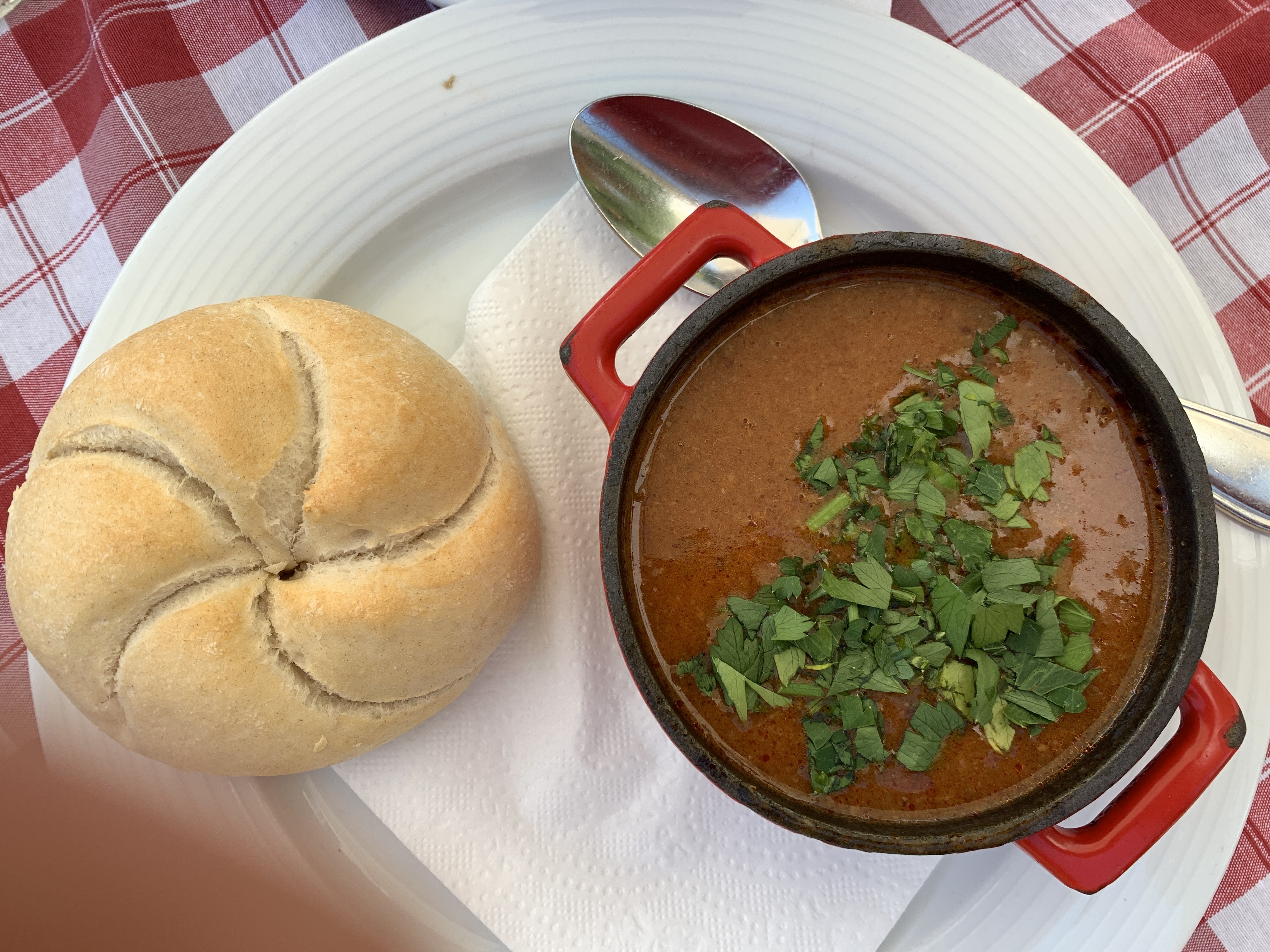 Origin: from the Latin word “similia”, which means “feines Weizenmehl” (high quality wheat flour).
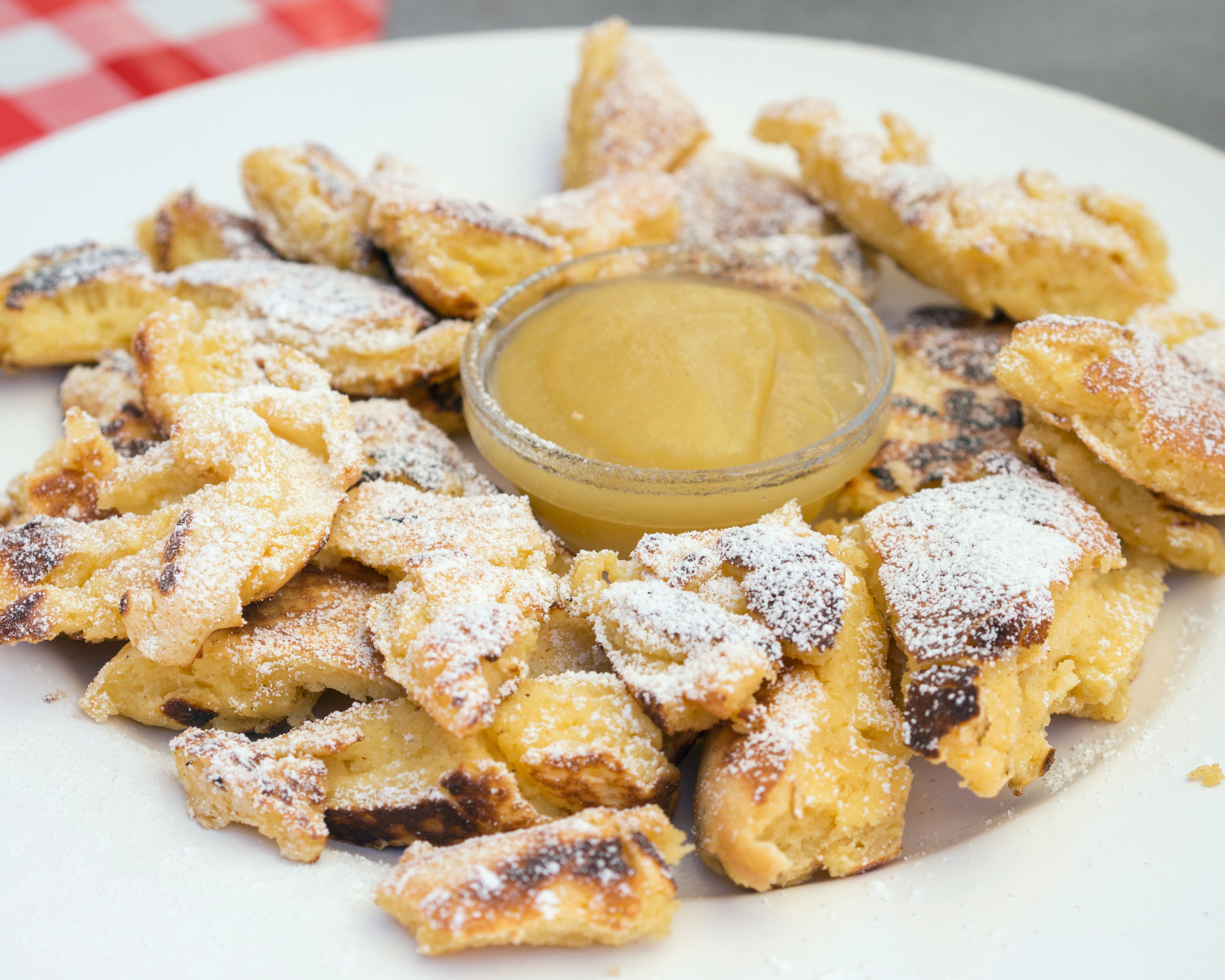 Literally: "Schmarrn" means "mess, mishmash, nonsense".
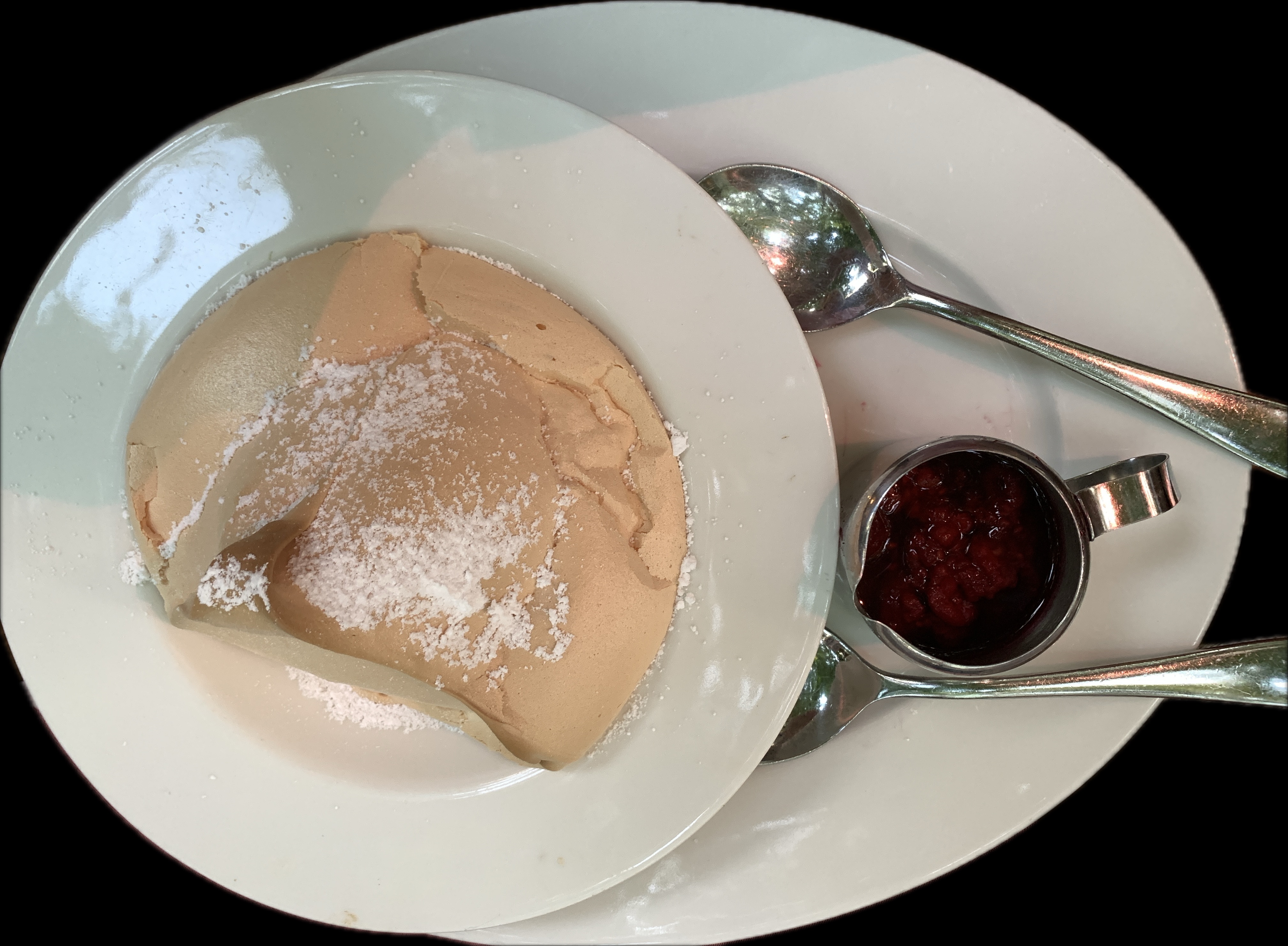 Origin: from the older German word “Nocken” (clumps, small hills). And, there may or may not be a connection between the Italian word “Nockerl” and the Italian word “gnocchi”.
 If Scandinavian languages are your thing, this book is for you: “Comparative Grammar of Swedish, Norwegian and Danish, Learn 3 Scandinavian Languages at the Same Time” Robertson B. Kunz, 2024. It is available on
  If you're into Romance languages, be it Spanish, and/or Portuguese, French, Italian, here's a learning tool and grammar guide that you would enjoy: “Learn and Retain Spanish, Portuguese, Italian, and French, with Spaced Repetition”, by Adros Verse Education, Bucharest 2024.
 Most of us know that there is a big difference between “knowing” vs “speaking” a foreign language.
 A few years ago, we wrote a Post:
  For the month of July, Laney, the 16-year-old daughter of a close friend, came to visit us on her own. She had one request: Please, speak only English with me. At the end of July, we sat down for a brief interview to talk about her month-long English immersion experience here in the US.
 With a name like Gamesforlanguage.com, it's no wonder that people find us by searching language games. And even if our main languages and courses are French, German, Italian and Spanish, it is not difficult for us to add games for other languages by using our games format.
 Understanding Swiss German dialects is a real challenge for German learners. But they are not alone: Even German natives often have great difficulties with some Swiss German dialects.
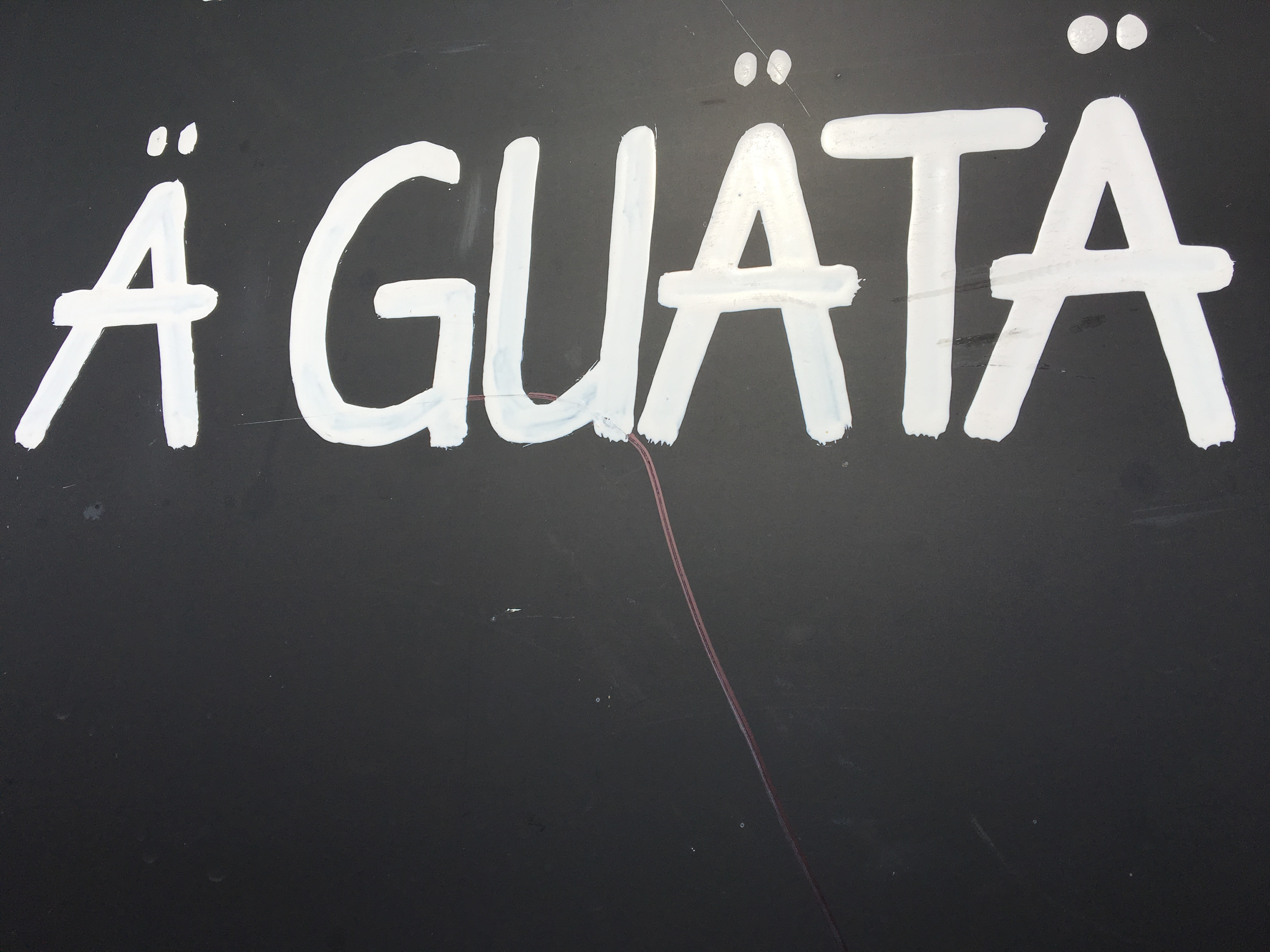 There is also no standard written Swiss German. In writing, Swiss Germans use their dialect mostly just for some informal communication, sometimes in emails, text messages, on social media, occasionally in personal letters etc. The words are then written phonetically, just the way they are said.
 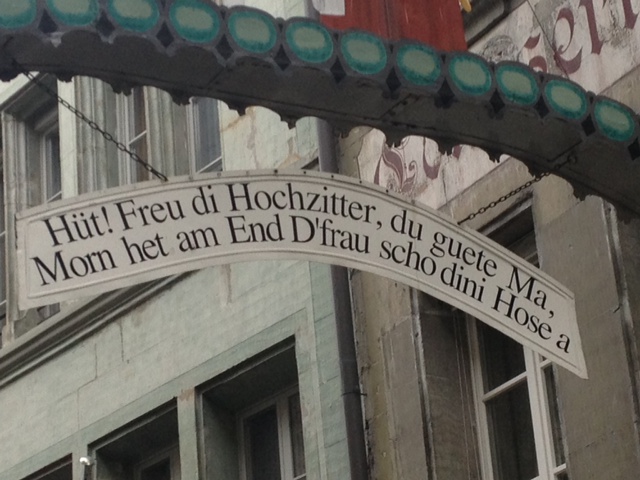 Our visits to Switzerland have been mostly to the bilingual city Fribourg, which straddles a language border between French and the Swiss German. To find out more about bilingualism in Fribourg, click on the article by Antilia Wyss